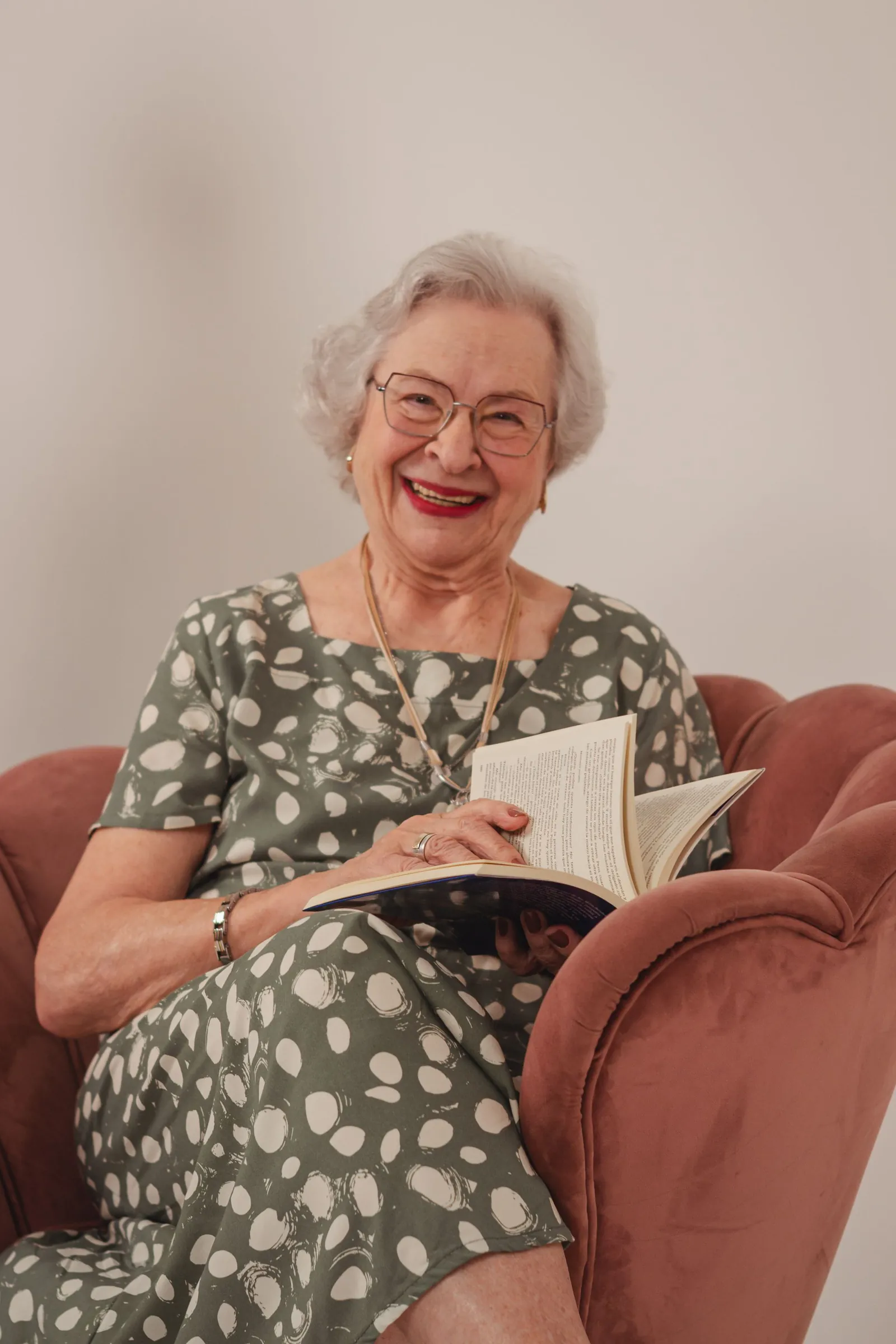
Ah, the perm. Mention it to a room full of ladies and you’ll hear stories about tight curls in the seventies, frizzy disasters and that unmistakable smell in the salon. Perms have come a long way since then, and for lots of older ladies a soft perm is still a brilliant choice.
I do perms in care homes, and they’re often requested by ladies who have had one for years and wouldn’t be without it. Here’s what I think anyone considering a perm, or a family thinking about one for a relative, should know.
What is a perm?
A perm (short for “permanent wave”) uses a solution to change the structure of the hair so it holds a curl or wave. Hair is wound around rods, the perm solution is applied, then a neutraliser fixes the new shape. Once it’s done, the curl stays in the hair until it grows out or is cut off.
The size of the rods decides the result. Small rods give tighter curls. Larger rods give soft waves and gentle body. For most of the ladies I see, softer is usually the aim.
Why do older ladies love perms?
Easier day-to-day styling
A perm gives hair a shape of its own. After washing, it can often simply be scrunched or combed into place. That’s a big help in a care home, where carers may not have time for full styling every day.
Body for fine hair
As hair becomes finer, it can lose volume. A soft perm adds lift and fullness that lasts. I’ve written more about this in caring for thinning and fine hair in later life.
It’s familiar
Many ladies have had perms for decades. It’s how they recognise themselves, and keeping that look going can be really important.
Is a perm right for everyone?
Not always, and I’ll be honest about that. Before doing a perm, I think about a few things:
- Hair condition. Very fragile, broken or heavily coloured hair may not be suitable. A perm is a chemical process, so the hair needs to be in decent condition.
- Scalp. If the scalp is sore, broken or irritated, it’s not the right time.
- Sitting time. A perm takes longer than a set. Some people find sitting for that long tiring or uncomfortable.
- Personal wishes. Above all, it has to be what the person wants.
Before any perm, it’s good practice to check how the hair and skin respond, and I’ll talk through any concerns with the person, the care staff and family where appropriate. If a perm isn’t a good idea, I’ll suggest something else, like a wash and set, which gives curl without chemicals.
Perms and dementia
For someone living with dementia, a perm needs extra thought. It takes time, involves rollers and solutions with a distinctive smell, and needs the person to sit fairly still. Some ladies who have always had perms are perfectly happy and find the routine familiar. For others, it may be too long. I’ll always talk to staff first, keep explaining each step and stop if someone becomes unsettled. My dementia-friendly hairdressing page explains more about my approach.
What happens on the day
- A chat. What kind of curl? Soft and loose, or a little firmer? Any problems with past perms?
- A gentle wash. The hair is shampooed to prepare it.
- Winding. Hair is sectioned and wound neatly around the rods. I take care to keep things comfortable, with breaks if needed.
- Solution. The perm lotion is applied carefully, with cotton wool around the hairline to protect the skin.
- Neutralising. After the right processing time, the hair is rinsed and the neutraliser fixes the curl.
- Finishing. Rods out, a light condition, and the hair is styled.
Good to know: the familiar perm smell can linger for a day or two. It fades, I promise!
Looking after a perm
A perm lasts longest with a bit of care, especially in the first couple of days.
- Avoid washing the hair for a day or two afterwards so the curl can settle
- Use a gentle shampoo and conditioner
- Comb through with a wide-toothed comb, starting at the ends
- Avoid brushing hard, which can make curls frizzy
- Let it dry naturally or with a diffuser on a cool setting
- A silky pillowcase helps reduce flattening and frizz
Care staff and families might find my post on looking after a relative’s hair between visits useful too.
Questions families often ask
Families sometimes worry about whether a perm is “too much” for an older relative. It’s a fair question. The honest answer is that it depends on the person, their hair and how they feel on the day. If Mum has always loved her perm, has hair in good condition and is comfortable sitting for a while, it can be a lovely treat that keeps her looking like herself. If she’s frail, tires easily or her hair is fragile, a set may be the kinder option. I’m always happy to talk it through with families, through the care home or directly.
How long does a perm last?
It depends on the hair and how quickly it grows. The curl doesn’t wash out, but as new hair grows from the roots and ends are trimmed, the perm gradually softens. Many ladies keep it fresh with regular trims and have it redone when the roots start to feel flat. I’ll suggest timings that suit each person’s hair.
Perm or set?
If you’re not sure which to choose, here’s a simple way to think about it:
- Choose a perm if you’d like curl or body that lasts weeks and makes daily styling easy.
- Choose a set if you prefer no chemicals, enjoy the weekly ritual, or hair isn’t suitable for perming.
Some ladies do both: a soft perm for body, with a weekly set on top for that polished finish. You can read about my perms on my services page.
Perms across the area
I offer perms in care homes around Weston-super-Mare, as well as Clevedon, Portishead, Burnham-on-Sea, Cheddar and the surrounding towns and villages. If you’d like to talk about a perm for yourself or a relative, I’d be happy to help. Just head to book a visit and we’ll have a chat.
Questions people ask
Are perms suitable for older ladies?
Often, yes. A soft perm can add lasting body and make daily styling easier. It depends on the condition of the hair and scalp, so I always talk it through first.
How long does a perm take?
Longer than a wash and set, as the hair is wound, processed and neutralised. I take breaks if needed to keep things comfortable.
Can I wash my hair straight after a perm?
It's best to wait a day or two so the curl can settle. After that, use a gentle shampoo and comb carefully.
What if a perm isn't suitable for my relative?
I'll suggest something else, such as a wash and set, which gives curl and volume without chemicals.
Maria is the caring, dementia-friendly hairdresser behind Hair by Maria, visiting care homes across Weston-super-Mare, North Somerset and Sedgemoor. Fully insured and DBS checked.
More about Maria