When I visit a care home, I see each resident for a little while every week or few weeks. The rest of the time, it’s the care staff and families who keep things going. And honestly, the little things you do in between make a big difference to how comfortable and cared for someone feels.
So this post is for you: the daughters, sons, grandchildren, friends and carers who’d like to help. None of this needs special skills. It’s mostly about being gentle and keeping things familiar.
Brushing: little and often
A gentle daily brush keeps hair tidy, helps prevent tangles and often feels lovely. Here’s how to make it comfortable:
- Ask first. “Shall I give your hair a brush?” Even if you think the answer will be yes, asking matters.
- Use a soft brush. A soft bristle brush or wide-toothed comb is kindest.
- Start at the ends. Hold the hair just above the section you’re brushing so you’re not pulling on the scalp.
- Follow their style. If they have a set, use a light touch and fluff rather than flatten. If it’s a short cut, brush the way it naturally sits.
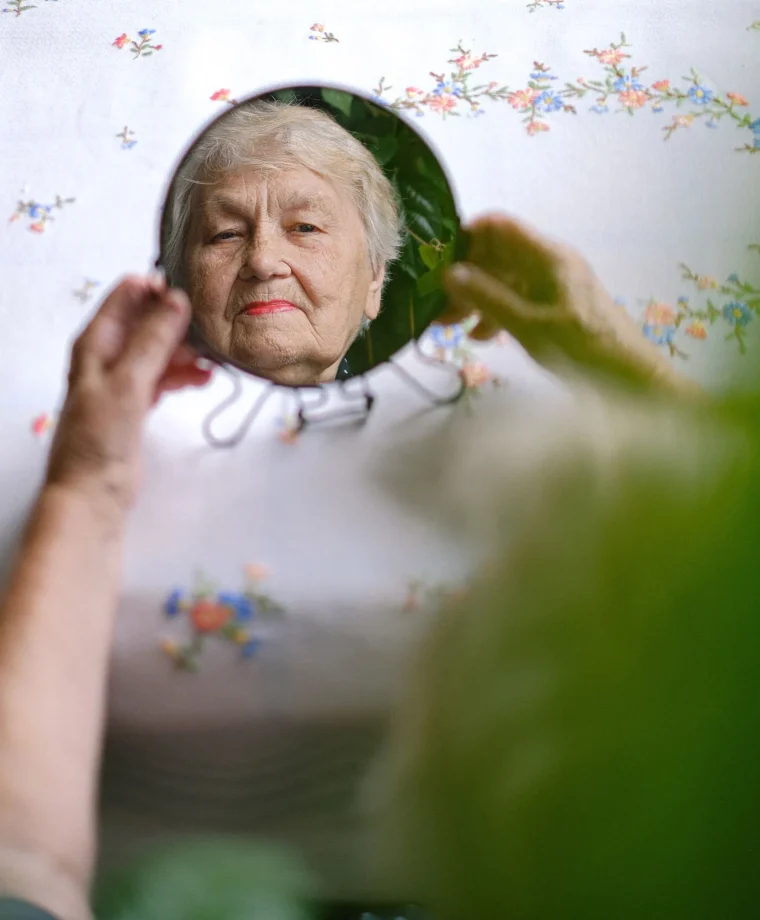
- Finish with a look. A mirror and a “that looks lovely” goes a long way.
Maria’s tip: bring their own brush from home if you can. A familiar brush, perhaps one they’ve had for years, can be comforting.
Keeping a set looking fresh
Lots of ladies have a weekly wash and set, and with a bit of care it can look good all week.
- A hairnet or soft scarf at night helps protect the shape
- A satin or silky pillowcase reduces flattening and frizz
- A shower cap during bathing keeps the set dry
- If it looks flat, lift gently at the crown with fingertips rather than brushing hard
If you’re not sure what a set involves, I’ve explained it in the wash and set explained.
Washing between visits
Many people are happy with their hair being washed only at their hair appointment. If it needs a wash in between, perhaps after a spill or a warm spell, a few things help:
- Check with care staff first, as they’ll know how the person feels about hair washing
- Use lukewarm water and a mild shampoo
- Protect the eyes and face with a folded flannel
- Washing forwards over a basin, or with a jug, can be more comfortable than leaning back
- Pat dry gently with a towel; avoid rubbing
Dry shampoo can be handy for a quick freshen up on some hair types, but use it lightly and brush it through well.
Gents: keeping tidy
For gentlemen, a quick comb through each morning is often all that’s needed. Keep an eye on eyebrows and ears, as stray hairs can be tidied at their next appointment. If he always had a particular hair product, like a bit of cream or a dab of wax, bringing it in can help him feel more like himself. There’s more in my post on gents’ grooming in care homes.
Keeping things familiar
Familiarity can be a real comfort, particularly for someone living with dementia. Small things help:
- Keep the same parting and the same general style
- Use products they’ve always liked, if the care home is happy with them
- Keep favourite hair accessories, like clips, slides or combs, close to hand
- Stick to a routine, like brushing after breakfast
If your relative has only recently moved in, there often isn’t room in a care home bedroom for everything they’d like from home, and deciding what to part with can feel like a lot at once. A local self storage unit, such as Infinity Storage in Weston-super-Mare, means those decisions can wait, and familiar things like a favourite mirror or vanity case can be swapped in and out of the room over time.
Be gentle with sensitive scalps
Older skin can be more delicate. Be careful with tight bands or clips, and choose soft fabric scrunchies instead of elastic. If you notice anything unusual on the scalp, like soreness, flaking or redness, let the care staff know so they can decide what to do.
Make hair time a nice time
Brushing someone’s hair can be a really lovely moment together. It’s calming, close and caring. Some families tell stories or listen to favourite music while they do it. Others just enjoy the quiet. If your relative enjoys it, it could become a little ritual for your visits.
Sometimes the gentlest moments are the ones that mean the most.
Things to tell the hairdresser
You know your relative best, and I’d love to know what you know. Let me or the care staff know:
- How they’ve always liked their hair
- Any dislikes, like water on the face or hairdryers
- Any special occasions coming up
- If they’ve seemed unhappy with their hair recently
- Old photos where they loved how their hair looked
My page for families explains how you can arrange visits and pass on preferences.
Seasonal care
Hair needs change through the year. In summer, a sunhat in the garden protects both the hair and a delicate scalp, and hair may need a freshen up more often if it’s warm. In winter, central heating and woolly hats can make hair dry and full of static. A light conditioner on the ends at wash time, and a soft brush rather than a plastic comb, can help keep flyaways under control. If hats flatten a set, a gentle lift at the crown with fingertips usually brings it back.
When to leave it for the hairdresser
It’s tempting to give a fringe a quick snip, but I’d gently suggest leaving cutting to the hairdresser. It’s easy to go a little wonky, and scissors near the face need a steady hand and a still head. If a fringe is getting in the eyes, a clip or a gentle sweep to the side can help until the next visit. Colour is also best left to a professional.
A quick routine
Every day: a gentle brush, following their usual style.
Every night: a hairnet or scarf if they have a set.
Bath time: a shower cap to protect the style.
Every visit: pass on any requests or changes to staff.
Here to help
I visit care homes in Portishead, Weston-super-Mare, Clevedon, Burnham-on-Sea, Cheddar and the villages around them, looking after ladies and gents with cuts, sets, colour, perms and grooming.
If you’d like to arrange regular hairdressing for your relative in their care home, take a look at book a visit and get in touch. I’d love to help.
Questions people ask
How often should I brush my relative's hair?
A gentle brush once a day is usually enough to keep hair tidy and tangle-free. Always ask first and use a soft brush.
How can I make a wash and set last longer?
A hairnet or soft scarf at night, a silky pillowcase and a shower cap at bath time all help a set keep its shape.
Should I trim my relative's fringe between appointments?
It's best left to the hairdresser. A clip or gently sweeping the fringe to the side can help until the next visit.
What should I tell the hairdresser about my relative?
Their usual style, any dislikes such as water on the face, upcoming special occasions and any photos of a style they loved.

Maria is the caring, dementia-friendly hairdresser behind Hair by Maria, visiting care homes across Weston-super-Mare, North Somerset and Sedgemoor. Fully insured and DBS checked.
More about Maria